prism-app
Release Notes - Week of January 14, 2026
Social Toolkit (Utility Server)
What’s New
Lower API costs with the same output quality
Transcript extraction now fetches YouTube video metadata only once per request, reducing repeat calls and cutting overall YouTube API usage by ~50%.
Higher uptime under rate limits and transient failures
All endpoints now include automatic exponential-backoff retries, improving reliability during brief upstream issues and gracefully handling rate limits—resulting in no more 429-driven failures in normal operation.
Fewer blocks from bot protections and JavaScript challenges
We strengthened anti-blocking behavior by enabling:
- EJS remote components
- PO token support
This improves successful access when YouTube presents JavaScript challenges and other bot-protection flows.
More resilient language handling
Transcript extraction now includes automatic language detection with an English fallback, keeping requests successful even when the original language metadata is incomplete or inconsistent.
LearnLens Studio
What’s New
Stronger search visibility with richer results
LearnLens Studio now includes course schema markup to power rich search results (ratings, descriptions, and key details) so courses stand out in Google before users even click.
Complete discoverability foundation for organic growth
We expanded the SEO and indexing foundation with:
- Google Analytics 4 integration
- Search Console verification
- Dynamic sitemaps and robots.txt
- Organization and WebApplication schema markup
Clearer navigation for users and search engines
Breadcrumb navigation is now available across pages, including breadcrumb schema, helping users understand where they are and helping search engines better interpret site structure.
Page-specific metadata that stays accurate at scale
Metadata is now dynamically generated per page (courses, popular content, and key pages) so each page is properly optimized with the right titles, descriptions, and social previews.
Instant, polished course-ready notifications
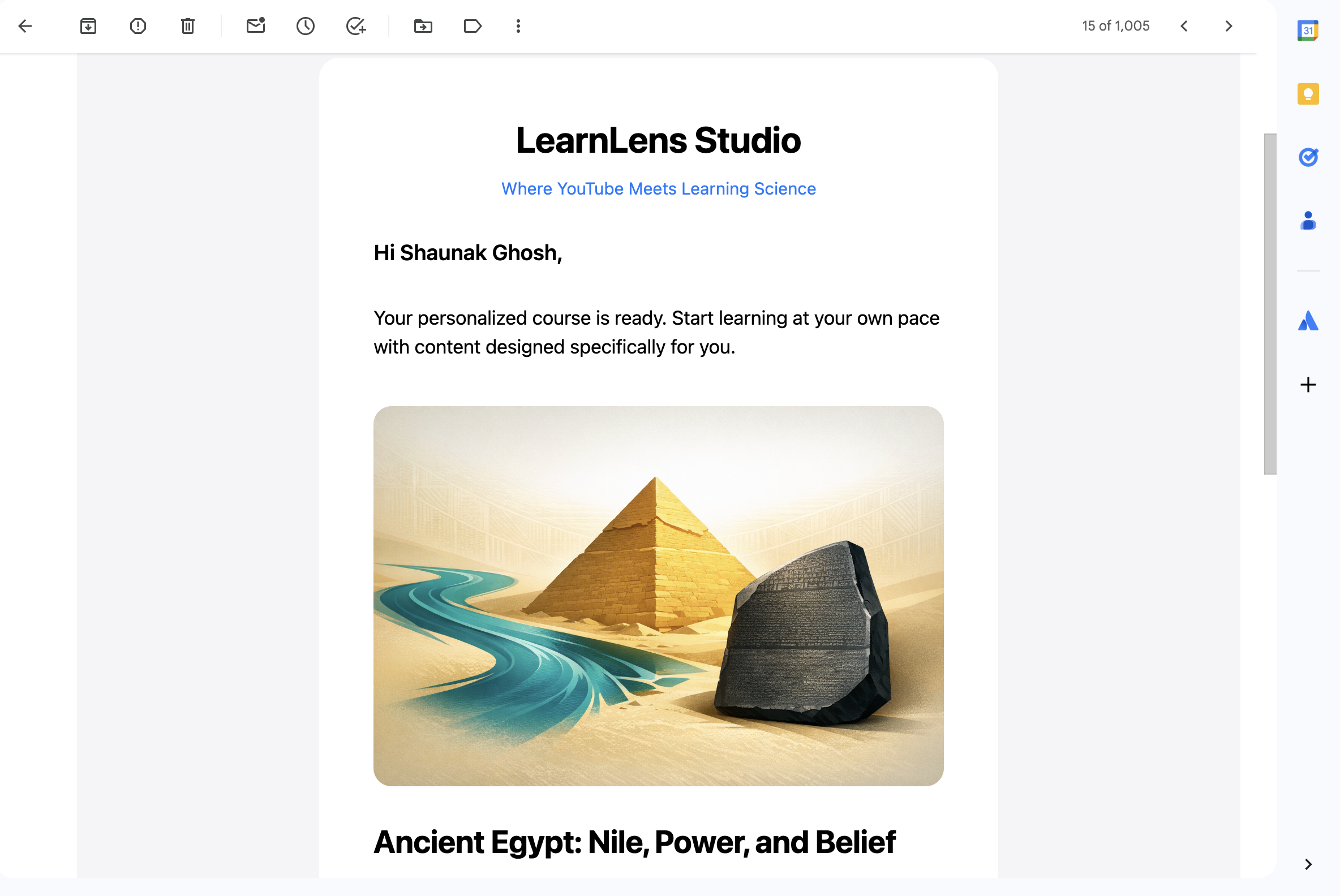
Users now receive immediate, Apple-inspired email notifications when a course is ready—complete with thumbnails, course stats, and one-click access.
More reliable course generation under heavy load
Generation is now more resilient for large courses via smart retry logic and sequential processing, preventing timeouts and improving successful completion rates during peak load.
Improved trust and compliance signals
Dedicated Privacy Policy and Terms pages strengthen user trust and support SEO signals and domain credibility.
Faster loading and improved Core Web Vitals
We introduced next-gen image optimization (including AVIF and WebP) to reduce page weight and improve perceived performance—especially on mobile and slower connections.
Continue Your Learning Journey